

 2026 / 06 / 30
 Writer / Isabel Ramos
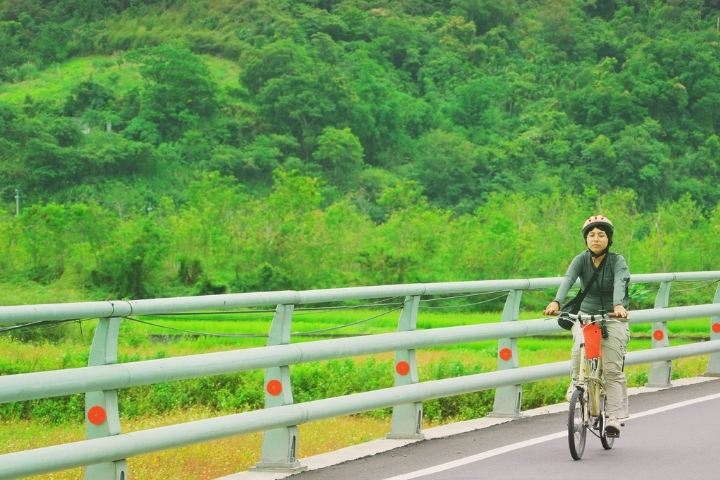
Throughout the past year, I have been a visiting Luce Scholar working with Tse-Xin Organic Agriculture Foundation to explore the intersections of sustainable farmland management, conservation, and food security in Taiwan. Through this collaboration, Tse-Xin and the Luce Scholars Program aim to foster meaningful cross-cultural learning and exchange, deepening mutual understanding of how ecological agriculture can support both people and the planet.
Taiwan’s diverse geography and accessible cycling and public transportation infrastructure makes the Huandao, a trip around the island, one of the most popular activities for tourists and locals alike. Though traditionally completed as a multi-week bike trip, people have completed the Huandao on scooters and trains (some even walking the 968 km journey).
In April 2026, I completed my own ‘Tse-Xin Huandao’, visiting Tse-Xin offices and partner initiatives across Taiwan to learn more about regional programming and collaborations with farmers. Traveling through Taitung, Kenting, Kaohsiung, Tainan, and Yunlin by train, bus, and car, I gained a deeper understanding of the diverse environmental, agricultural, and community-based programs promoting sustainable agriculture across the island.
First Stop: Taitung
Back in September, I visited Tse-Xin’s Hualien office and met with farmers and employees working towards conserving traditional crops, such as millet, as well as their partnerships with local schools introducing millet into school lunches. Taitung, also located on Taiwan’s eastern coast approximately 150 km south of Hualien, is home to multiple active Indigenous communities, including the Bunun and Amis. As such, Tse-Xin Taitung has many similar initiatives and during my time there, I was able to visit local schools and senior care centers who have programs promoting millet. These programs help provide weekly meals for over 600 students and elders in Taitung, while supporting local food security and agricultural education efforts in eastern Taiwan.
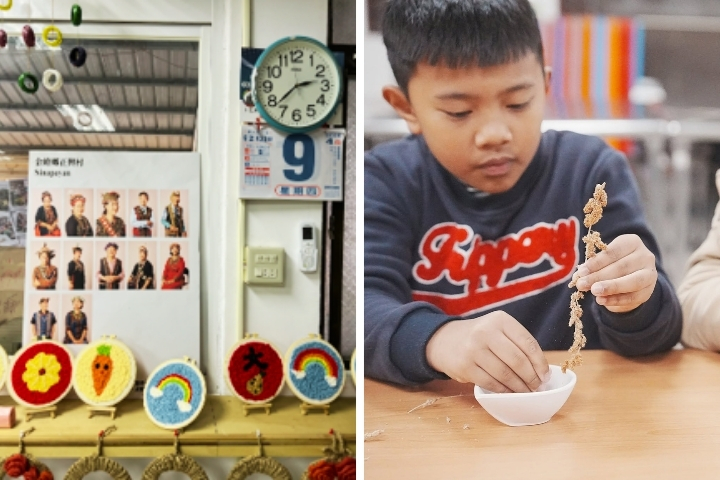
Because the cost of organic millet is often prohibitively high, Tse-Xin helps subsidize the millet bought by local organizations through securing corporate sponsors. In the short term this helps farmers transitioning to organic by ensuring a stable market, while ensuring millet is accessible to the communities that rely on it for cultural connection.
In addition to (re)incorporating millet back into local diets, Tse-Xin has partnered with farmers, scientists, and local governments on millet seed saving initiatives. Prior to 1960, Taiwan had over 200 millet varieties that have now been mostly lost or on the brink of extinction due to low germination rates and damage from predators. In collaboration with the Taiwan Seed Improvement and Propagation Station, 117 millet varieties have been conserved. Seed saving initiatives like these are more important now than ever as according to a 2010 FAO report, 75% of global crop varieties face extinction risk. This loss of diversity reduces agricultural resilience against future climatic shifts, highlighting the vulnerability of our current food systems. Thus, through seed conservation in Taitung, Tse-Xin hopes to increase food sovereignty while promoting food security more broadly across Taiwan.
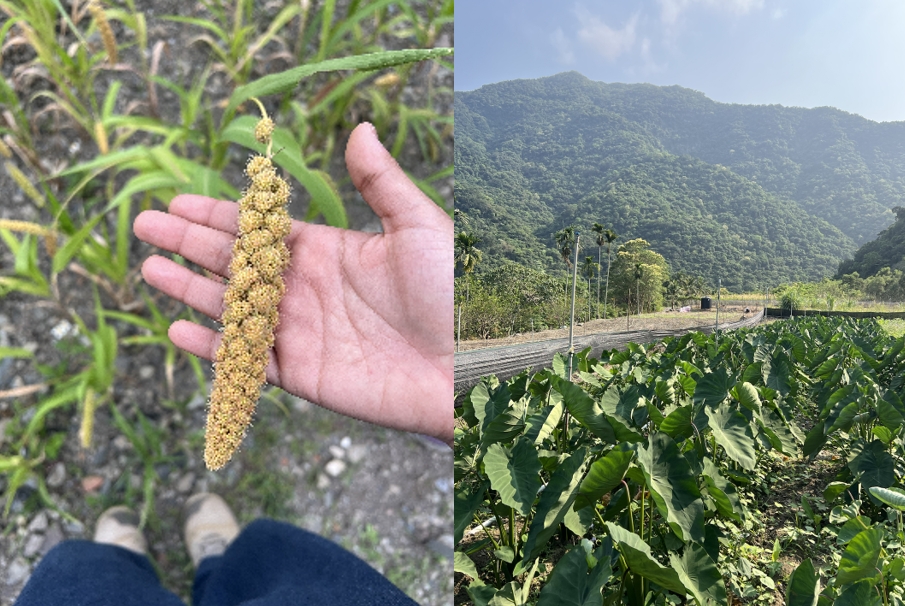 The Tse-Xin Foundation's recent "Seed Saving Project" promotes traditional indigenous crops like taro and red quinoa, in addition to millet.
Second stop: Kaohsiung
My second stop was visiting the Tse-Xin office in Kaohsiung where I learned more about Tse-Xin tree planting and Green Conservation initiatives protecting vulnerable species while also visiting an experiential farm working to record farmland biodiversity through citizen-science outlets like iNaturalist.
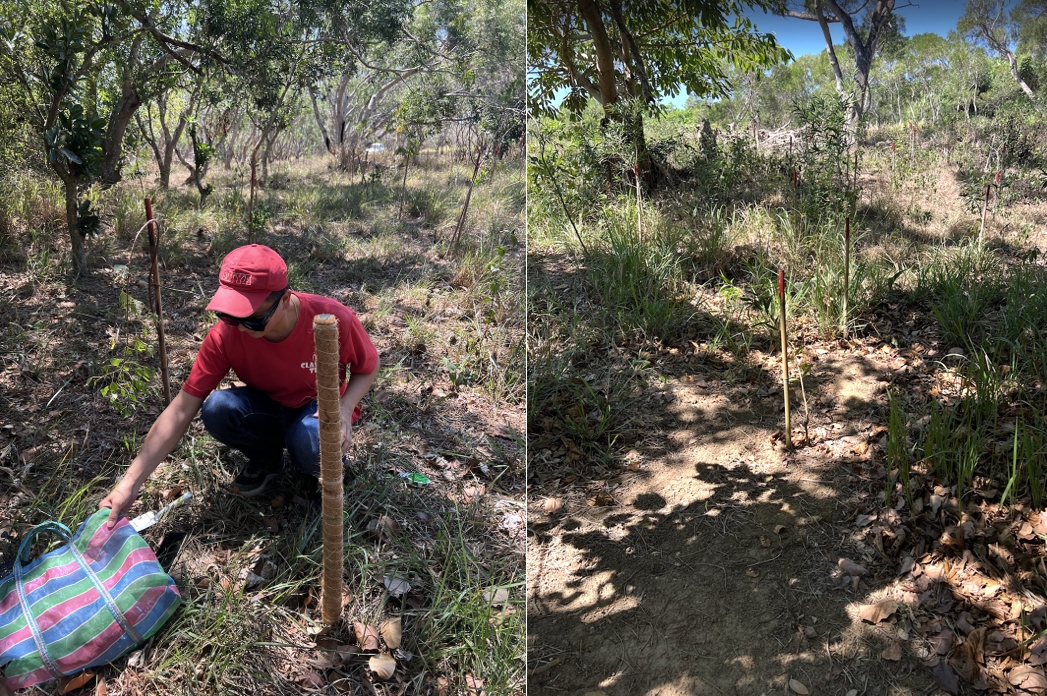
In addition to supporting transitions to organic agriculture in Taiwan, Tse-Xin also has tree planting initiatives around the island. Specifically, I visited a site in Kenting, the southernmost tip of Taiwan, that has had tree planting programming for the past several years. Here, I assisted in tree measurements and installing decoy trees to divert deer away from young saplings (pictured below), highlighting the need for creativity and flexibility in conservation. In collaboration with the Institute for Impact Measurement and Management (AIIMM) at National Central University, Tse-Xin received high recognition for its social impact in the world's first internationally certified Evaluative SROI report for tree planting, showing how its conservation efforts have a direct positive impact on local communities.
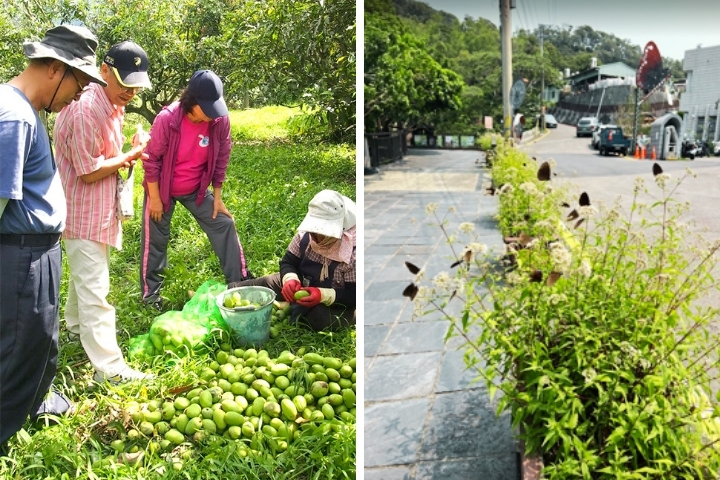
Moreover, in Maolin, just an hour outside of Kaohsiung and an important habitat for Taiwan’s purple crow butterfly, Tse-Xin works with mango farmers who have been particularly impacted by extreme weather and agricultural pests. Thus, Tse-Xin has organized farmer trainings and helped procure over 3 metric tons of green mangoes, securing farmers’ livelihoods while protecting vital habitat.
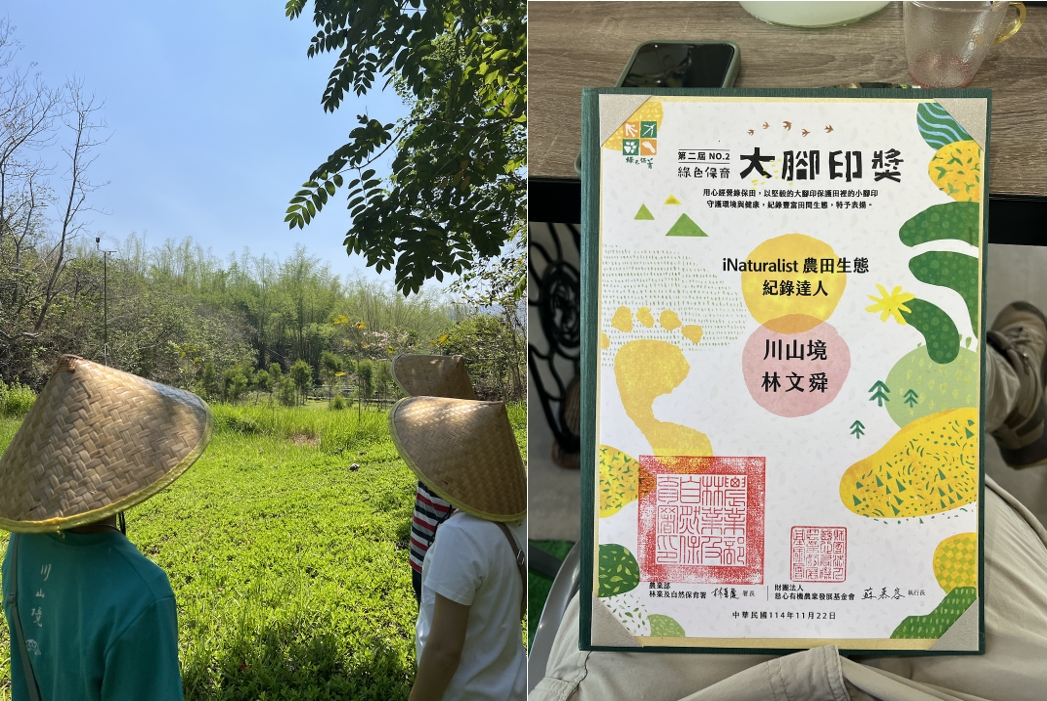
One of my final stops in Kaohsiung included visiting an experiential farm focused on increasing public awareness of organic farming through interactive events and informational tours. This farm also participates in Tse-Xin’s iNaturalist program, which encourages farmers to record and track biodiversity through a mobile app. To date a total of 39 farms are participating in this program, amassing over 12,000 recorded observations.
Third stop: Tainan
After Kaohsiung, I visited the Tse-Xin offices in Tainan, where I had the opportunity to visit the site of the beginnings of Tse-Xin’s Green Conservation label, and participate in community outreach initiatives including a plastic-free school event and beach cleanup.
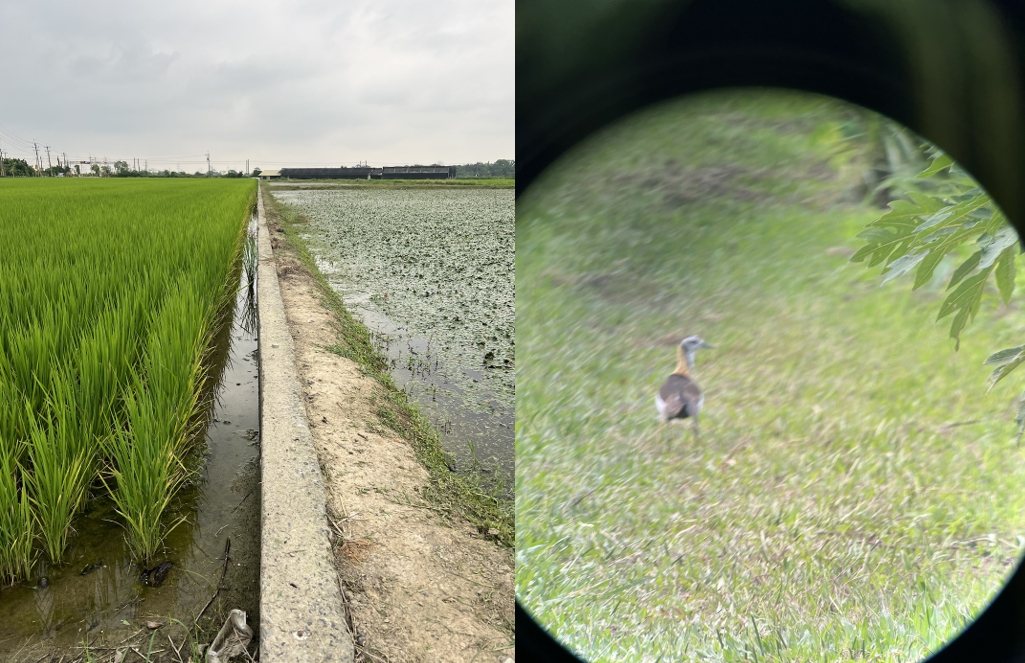
Green Conservation is a certification system created by Tse-Xin to work in tandem with organic farming in Taiwan, which emphasizes protecting farmland biodiversity. Originating after fields contaminated by pesticides led to a mass die-off event of the pheasant-tailed jacana, Green Conservation has been working in Taiwan for over 15 years to promote ecological farming practices. Getting to meet with one of the first farmers who got Green Conservation certified was eye-opening, learning firsthand some of the struggles he faced and continues to encounter as an organic farmer. Visiting his water caltrop fields, I saw countless pheasant-tailed jacanas, once again witnessing the direct impacts of sustainable farming practices. A total of 714 farms around Taiwan have since become Green Conservation certified, covering around 1,099 hectares of land.
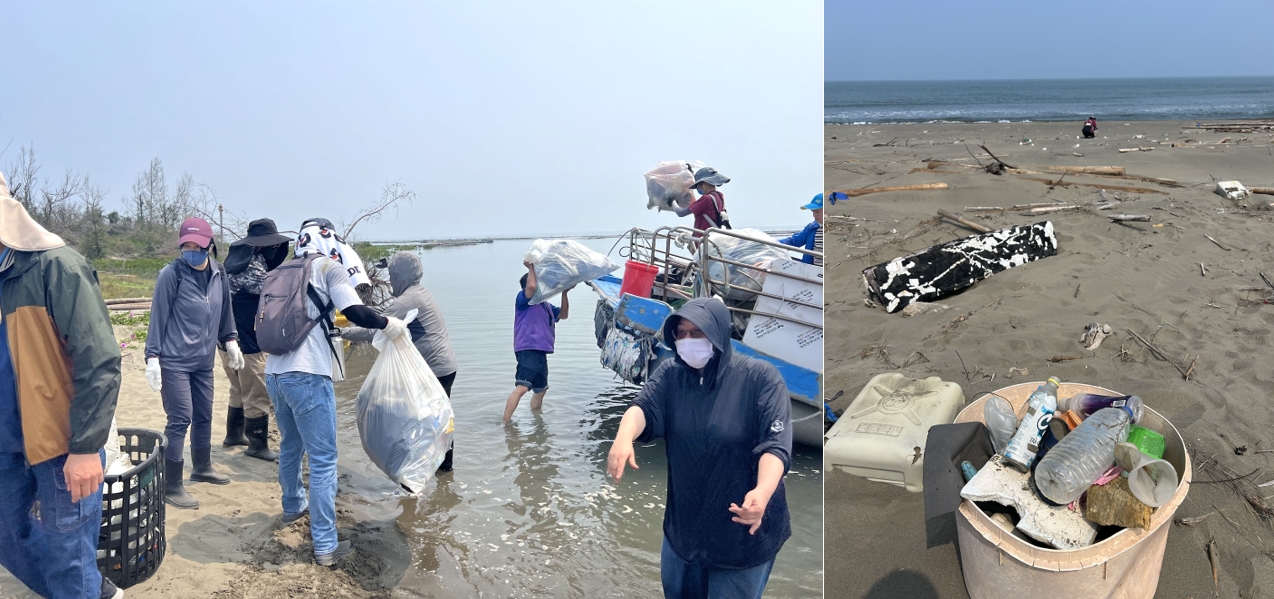
Similarly to events and programs I’ve participated and witnessed in collaboration with Tse-Xin’s Taipei and Taitung offices, witnessing the plastic free and beach cleanup events in Kaohsiung were similarly rewarding. Last year Tse-Xin hosted a total of 772 promotional events, including plastic reduction, tree planting, plant-based diets, and eco-friendly agriculture, with over 44,000 attendees. Tse-Xin recognizes the interconnected challenges of sustainable agriculture, food security, conservation, waste reduction, and environmental stewardship. With the help of volunteers across Taiwan, Tse-Xin has a capacity that few organizations possess to work across these interconnected issues to promote sustainable change.
Final Stop: Yunlin
My final stop on the ‘Tse-Xin Huandao’ included visiting the Bliss and Wisdom school and college in Yunlin as well as visiting Tse-Xin’s organic farm.
At Bliss and Wisdom high school, I had the opportunity to talk to a group of students, who shared their experience, gave me a tour, and explained how their education has impacted their current perspectives and future goals. Though not an agricultural school, Bliss and Wisdom high school makes sustainable agriculture a priority through school lunches and extracurricular gardening classes on their campus organic farm, which introduces students to the basic principles of gardening. Though some of the students I spoke with weren’t the biggest fans of gardening themselves, noting the arduous tasks and hot weather, they nonetheless expressed gratitude for the knowledge they’ve gained through it.
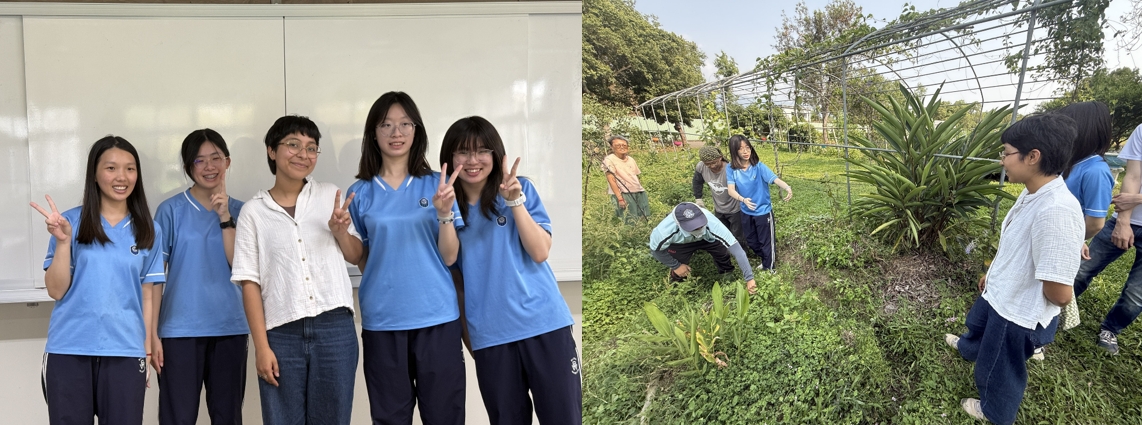
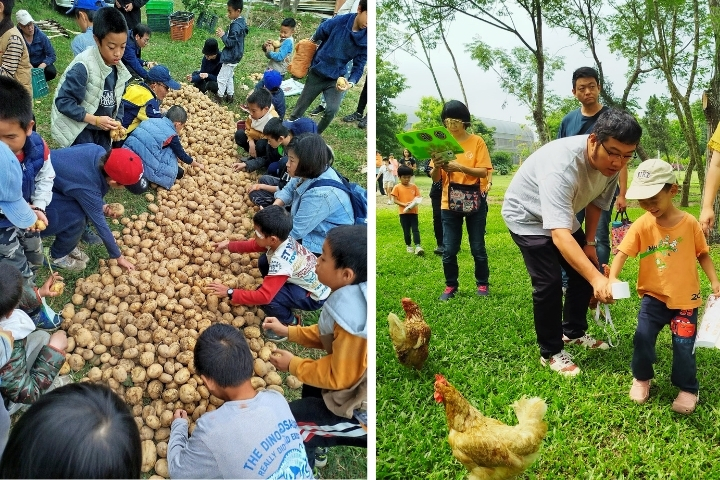
Just a 10-minute drive away was Tse-Xin’s own operating organic farm where they grow produce, have a cafe, and offer informational sessions and workshops. Recently, Tse-Xin celebrated its 15th anniversary of Green Conservation and hosted the "Taiwan Green Conservation Farmers Exchange Event" there. 326 farmers from across Taiwan were able to gather and reflect through forums, seed exchanges, product sharing, strengthening relationships and encouraging future collaborations.
Similarities and Differences
Throughout my time at Tse-Xin, one of my most poignant observations has been how faith-based organizations can be a tool for environmental change globally. Notably Iyad Abumoghli, the Director of the Faith for Earth Initiative of the United Nations Environment Programme (UNEP) said, “Faith communities – motivated by spiritual values and driven by an ethical responsibility – wield enormous social and political influence when it comes to promoting action to restore ecosystems”. Coming from the United States, where religion has increasingly become politically polarized, I was inspired by the extent to which faith-based organizations in Taiwan can serve as a collaborative and community-centered tool for environmental change. Rather than existing in opposition to scientific or environmental initiatives, spirituality and sustainability at Tse-Xin are deeply connected. Environmental protection is framed as a communal responsibility rooted in compassion, interdependence, and long-term stewardship. Witnessing this has inspired me to think more critically about how secular and faith-based organizations in the United States can work together toward shared sustainability goals.
Additionally, Taiwan’s smaller geographic size and robust public transportation infrastructure allow environmental initiatives and partnerships to be coordinated more efficiently across different regions. While each office focused on distinct local challenges, such as millet preservation in Taitung, butterfly habitat conservation in Kaohsiung, and Pheasant-tailed jacana conservation in Tainan, they remained connected through broader organizational goals surrounding sustainability, education, biodiversity conservation, and food security.
Contrastly, many of the organizations I’ve worked with in the U.S who have similar initiatives in addressing food system inequality, organic agriculture, conservation, and food sovereignty, are often localized to specific cities or states. While localized work can often foster strong community engagement, it also makes broader coordination and policy implementation more difficult. The national programs that do exist, such as the Conservation Stewardship Program (CSP) and the Environmental Quality Incentives Program (EQIP), both of which provide financial incentives for sustainable agricultural practices, suffer from chronic underinvestment and have not expanded sufficiently to meet farmer demand. Furthermore, the geographic scale and political diversity of the United States can make building consensus around environmental policy significantly more difficult.
My experiences across Taiwan also highlighted that there is no ‘one size fits all’ in conservation and that environmental work must adapt to reflect its cultural and political context. Taiwan also faces its own challenges related to land use, climate vulnerability, agricultural transitions, and balancing development with conservation. However, Tse-Xin at its core is committed to relationship building, between farmers and consumers, schools and local communities, scientists and governments, and people with the environment itself.
Ultimately, my Tse-Xin Huandao not only deepened my understanding of sustainable agriculture and conservation in Taiwan, but also challenged me to think more critically about how culture, community, and environmental stewardship intersect across different social and political contexts.