

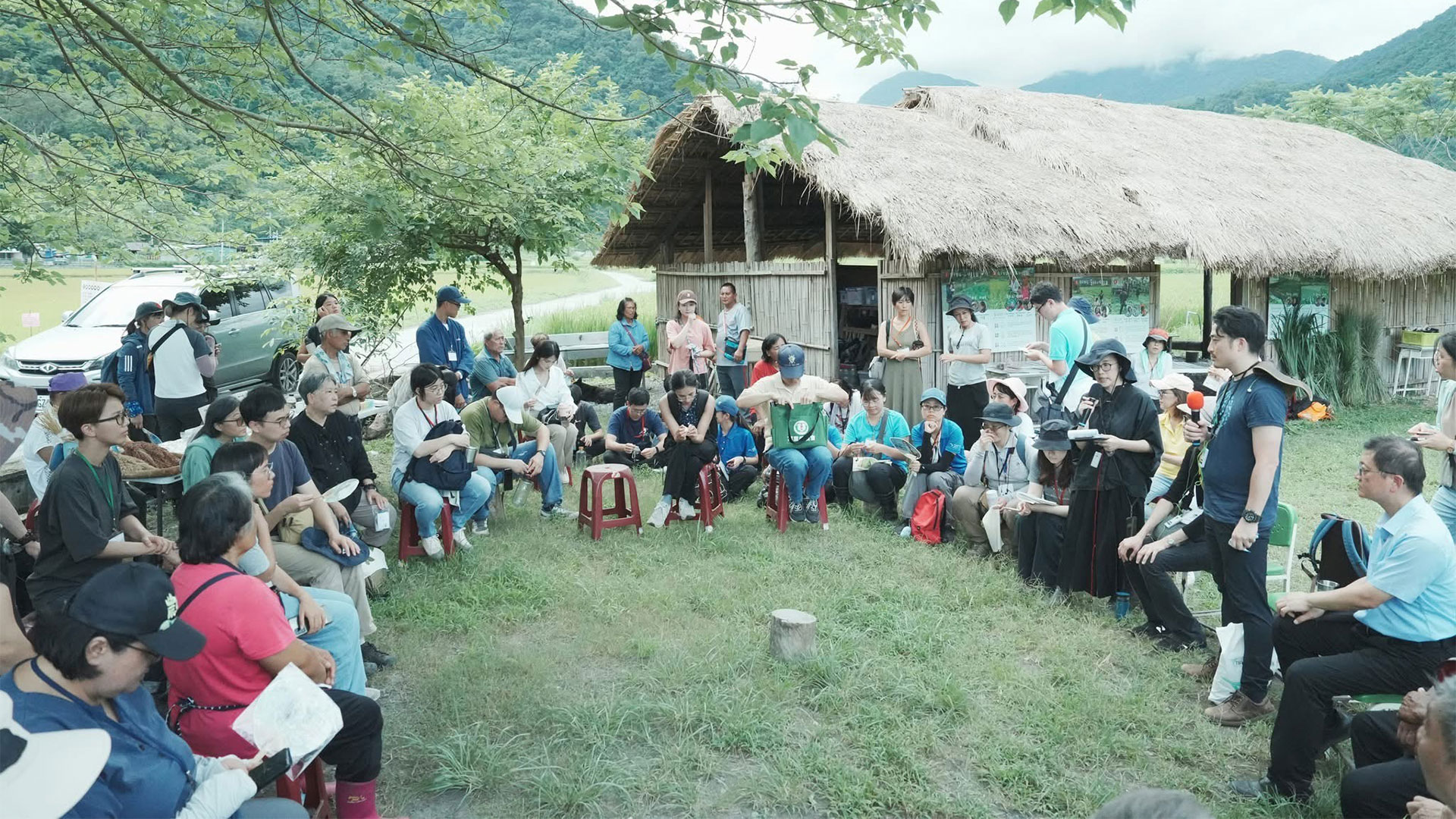
On this day, the Nan’an traditional house welcomed a very special group of guests—the participants of the Eastern Taiwan Workshop of the Taiwan Partnership for the Satoyama Initiative. Scholars from the IPSI (International Partnership for the Satoyama Initiative) Secretariat in Japan also joined the visit.
The workshop focused on the relationship between Satoyama and local traditional crafts, and everyone arrived in Nan’an with great anticipation, eager to observe and learn.
* IPSI / International Partnership for the Satoyama Initiative
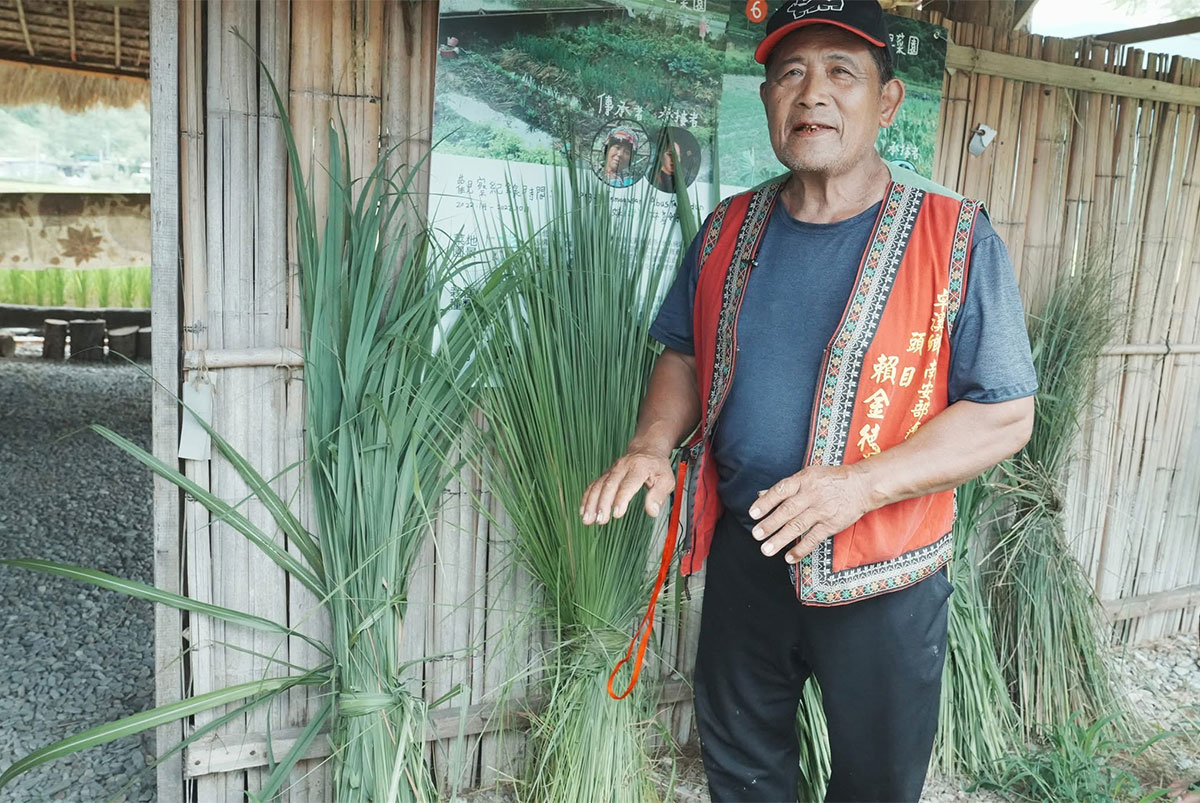 Chief Dama Vava (Lai Jin-De) asks:<br> “Which of these five bundles of grass is used for roofing the house?”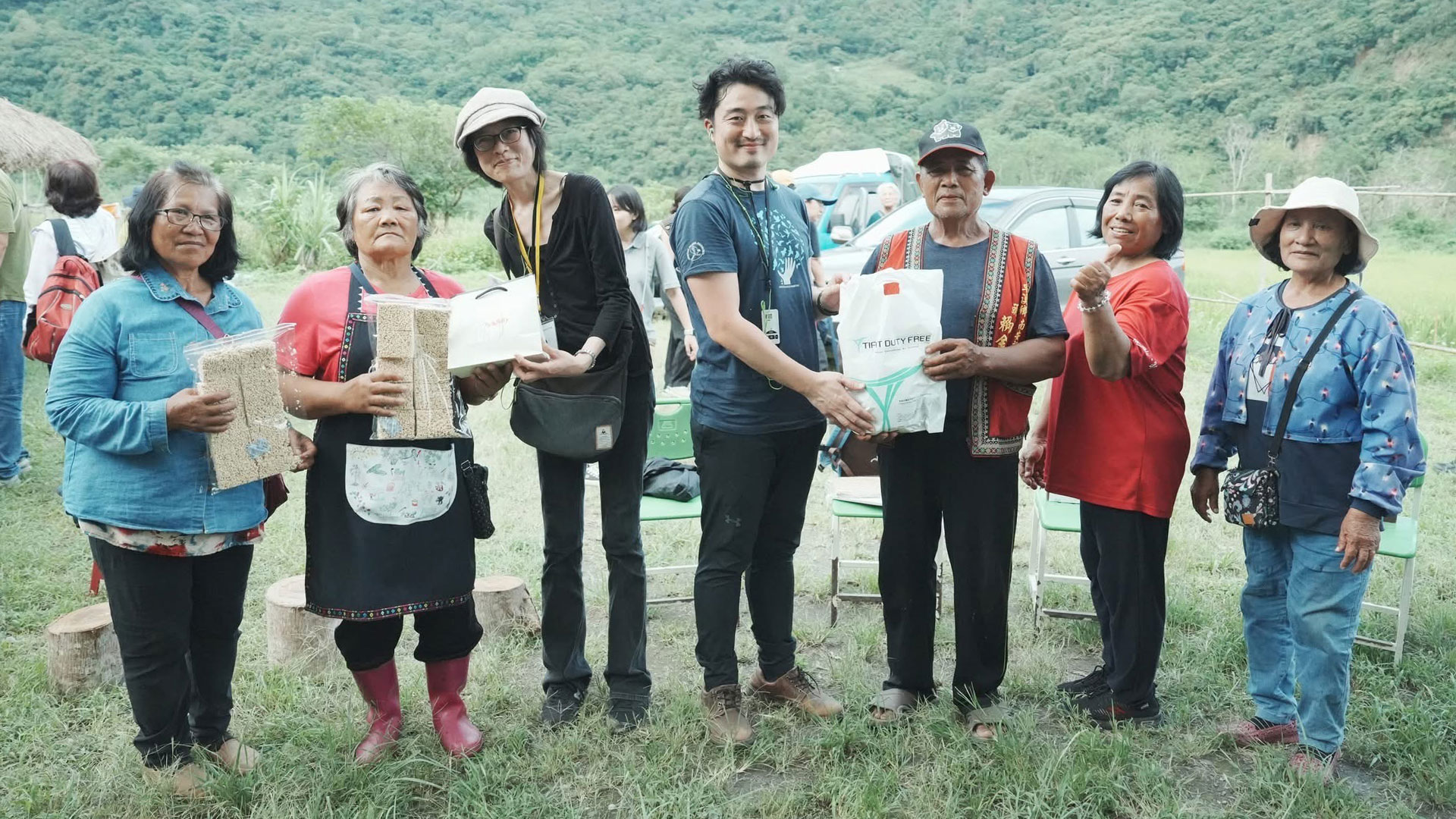
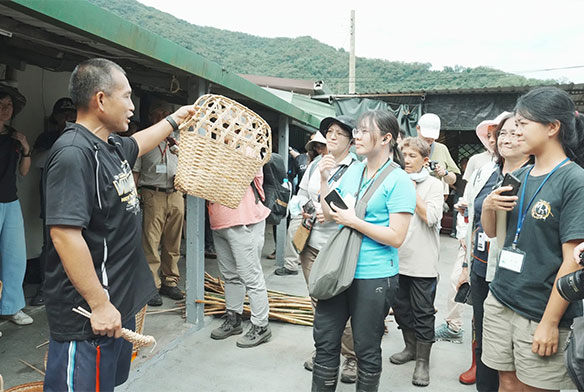 Introduction to traditional bamboo weaving.
 Experiencing head-carried bamboo baskets.
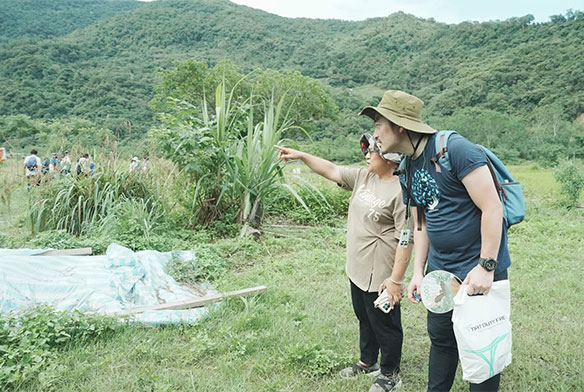
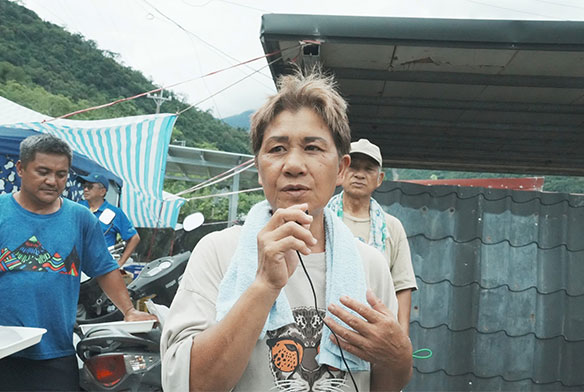 Farmers as the best guides,<br>introducing the unique features of their fields.
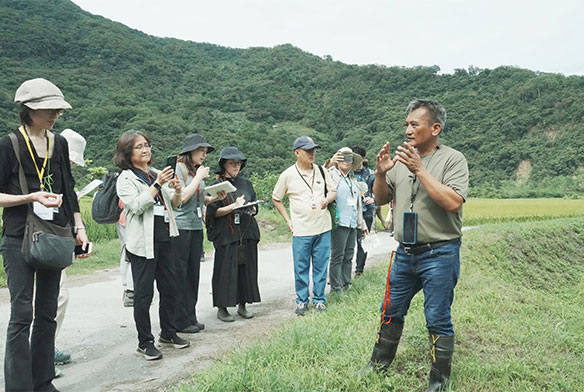 Farmers as the best guides,<br>introducing the unique features of their fields.
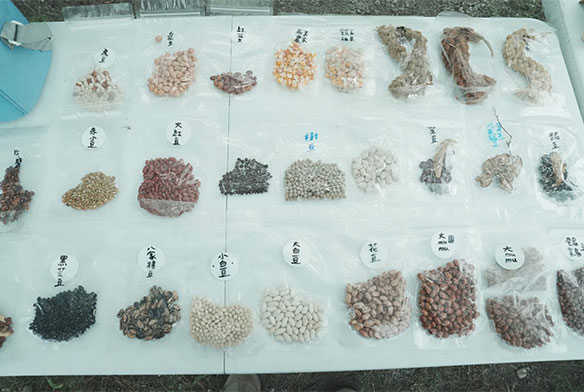 Seed-preserved beans on display
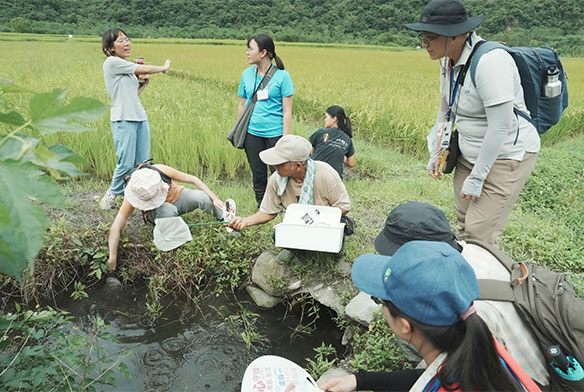 Field observation
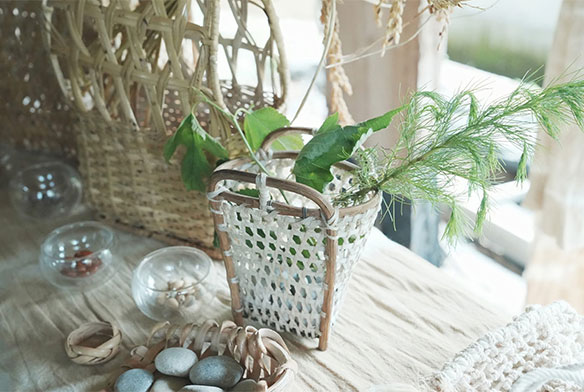 Display of traditional handmade crafts
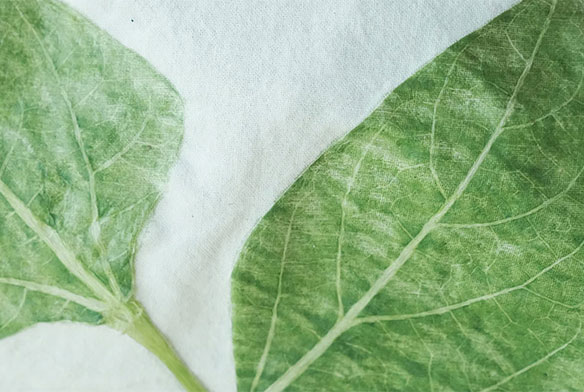 Hands-on plant dyeing
From the other end of the house came the constant sound of hammering—was there a party going on?
It turned out to be handmade plant dyeing! Participants lined up, eager dye a personalized handkerchief as a keepsake. This interactive station, guided by Ms. Chu Dai from the Alilai’en Craft Workshop, which has long been dedicated to sustaining local craft traditions, quickly became the highlight of the day.
Tina Lungus (Li Ju-Mei) led everyone on a tour of a traditional Bunun vegetable garden. With just a gentle pinch of her fingers, she explained the uses of each plant with care, as if every flower and herb were an old friend …
* Tina: an honorific title for female elders in the Bunun language.
Nearby, groups—yes, entire groups—of Kikuchi’s minnow, a small fish once listed as endangered in 2017, were seen swimming freely in the clear irrigation ditch beside the house.
Some participants even sat down by the crystal-clear water and soaked their feet, enjoying a moment of cool refreshment.
It was an afternoon that felt both deeply local and unmistakably international.
Discussions of traditional and modern agriculture intertwined in the first organic field at the foothills of Jade Mountain.
Several Tinas shared their thoughts:
“This has always been our traditional way of life. We never imagined it would one day become highly valued Satoyama knowledge.
Who would have thought that these ancient tribal traditions might be among the best solutions to the challenges of modern agriculture?”
Like the cogon grass used on the roof of the traditional house—something we grew up recognizing naturally and instinctively—visitors saw the house as a living example of how natural materials are transformed into practical crafts.
And the intercropping practices that the Bunun people have long taken for granted—planting diverse crops together in the fields—are now praised as models rich in biodiversity.
Suddenly, we felt an overwhelming sense of pride and honor in the traditional wisdom passed down by our ancestors.
These ways of life are now being discussed and observed on the international stage as exemplary Satoyama cases.
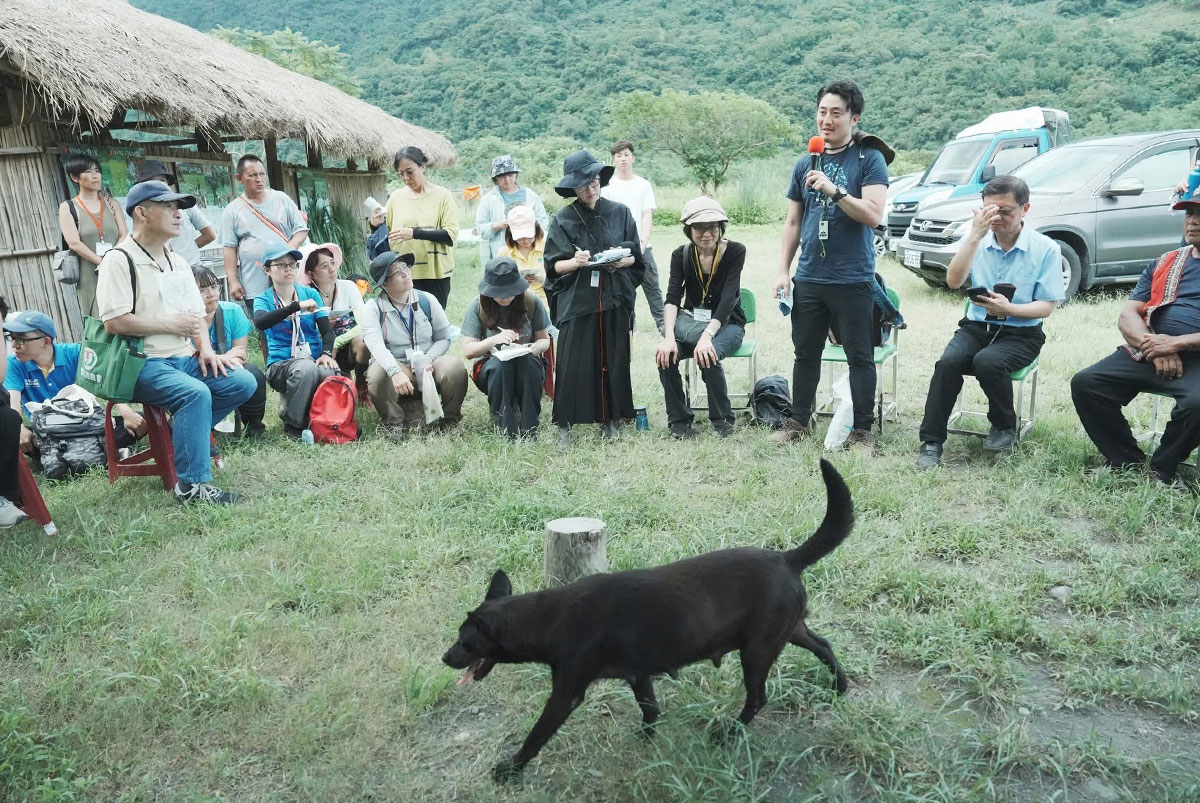 Reflections and suggestions from Koji Miwa (IGES)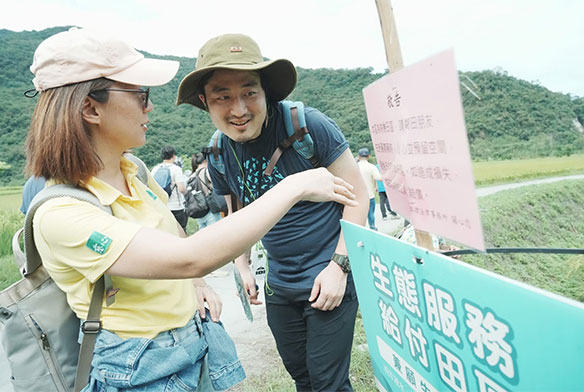
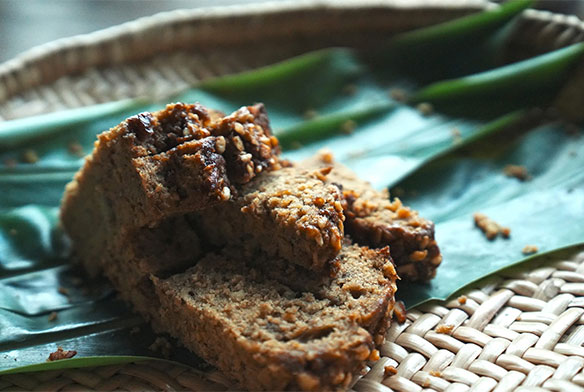 An impressive bean-themed afternoon tea
 Farmers as the best guides,<br>introducing the unique features of their fields.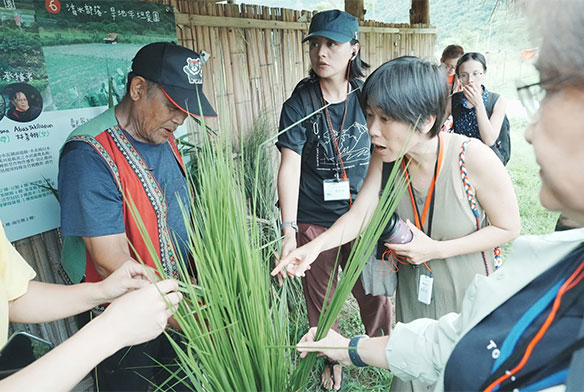

 Participants soaking their feet in the clear irrigation ditch
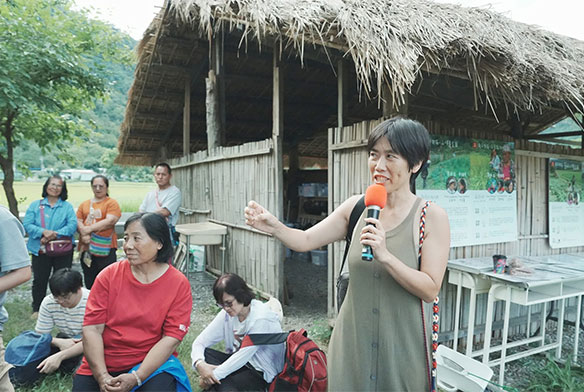 Enthusiastic feedback from workshop participants
Reflections from Workshop Participants
During the final session, one participant reflected:
“As times change, young people are often told that cultivating or farming on their own land as a lifestyle is outdated, unfashionable, and without a future.
But what I saw among the community elders was a completely different practice.
Every morning around five o’clock, they wake up and walk to their fields to see how their crops are doing. This is their lifestyle—it has nothing to do with whether it makes money.
Even in their eighties, even when they need a cane, even if they can only tend a small plot of land, they persist.
Why? Because they believe they must remain in constant interaction and dialogue with the land and the environment. This is the lifestyle they are accustomed to—and it continues naturally.
Yet this beautiful lifestyle, where people and land are closely and naturally connected, is rapidly disappearing.
What replaces it is endless discussion about how agriculture can become an industry.
The ethical relationship once embedded in farming—where people observed ecosystems and weather patterns, worked with natural forces, and aligned their routines with the seasons—is now quickly fading.”
International Responses
Koji Miwa (IGES – Institute for Global Environmental Strategies) shared:
“Japan faces similar challenges. Agriculture and forestry are labor-intensive, yet the rewards are disproportionate, leading many young people to move to cities. Promoting Satoyama and sustainable agriculture is extremely challenging.
However, I believe there is never only one solution. In Japan, some companies are working to raise agricultural product prices or to brand Satoyama-grown products to add value, encouraging consumers to pay more.
The world is now paying close attention to nature, and we all hope for better outcomes in the future.”
Dr. Maiko Nishi (UNU-IAS) added:
“During this visit to Hualien, I witnessed things that surprised me—things I once thought were impossible, but which have clearly been realized here.
Taiwan can confidently say that it is at the forefront of implementing the Satoyama Initiative. In the Satoyama Development Mechanism (SDM), Taiwan ranks among the top in both the number of applications and the quality of implementation.”
* SDM – The Satoyama Development Mechanism aims to encourage IPSI members to submit promising projects by providing seed funding of up to USD 20,000. The Cihsin Foundation also received support for its project on “The Transmission and Application of Nan’an Agricultural Knowledge.”
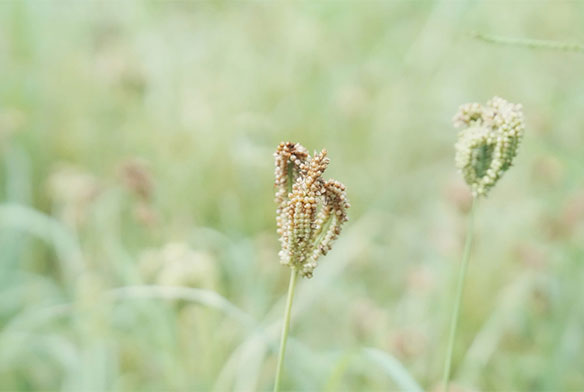 Finger millet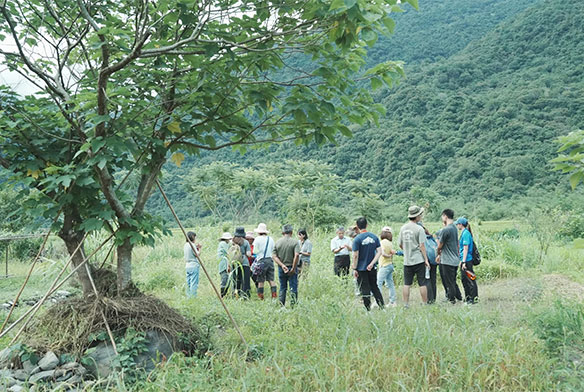
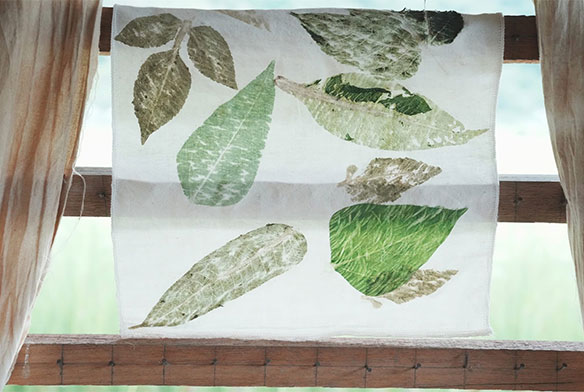 Hands-on plant dyeing
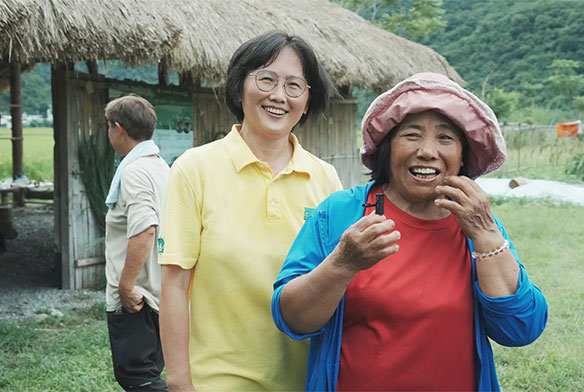 Farmers as the best guides,<br>introducing the unique features of their fields.
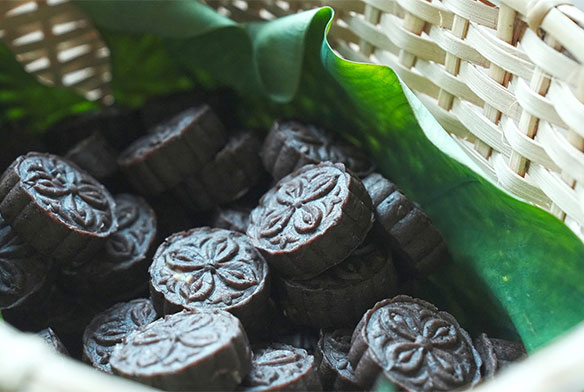 An impressive bean-themed afternoon tea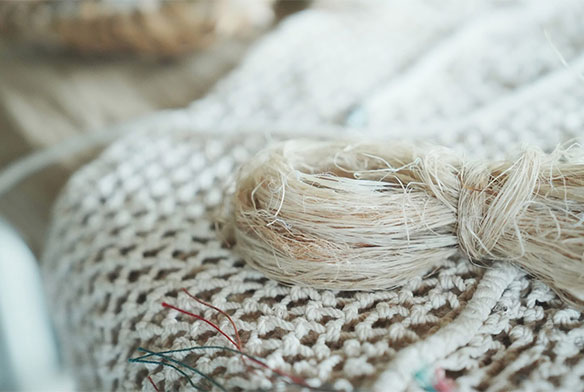
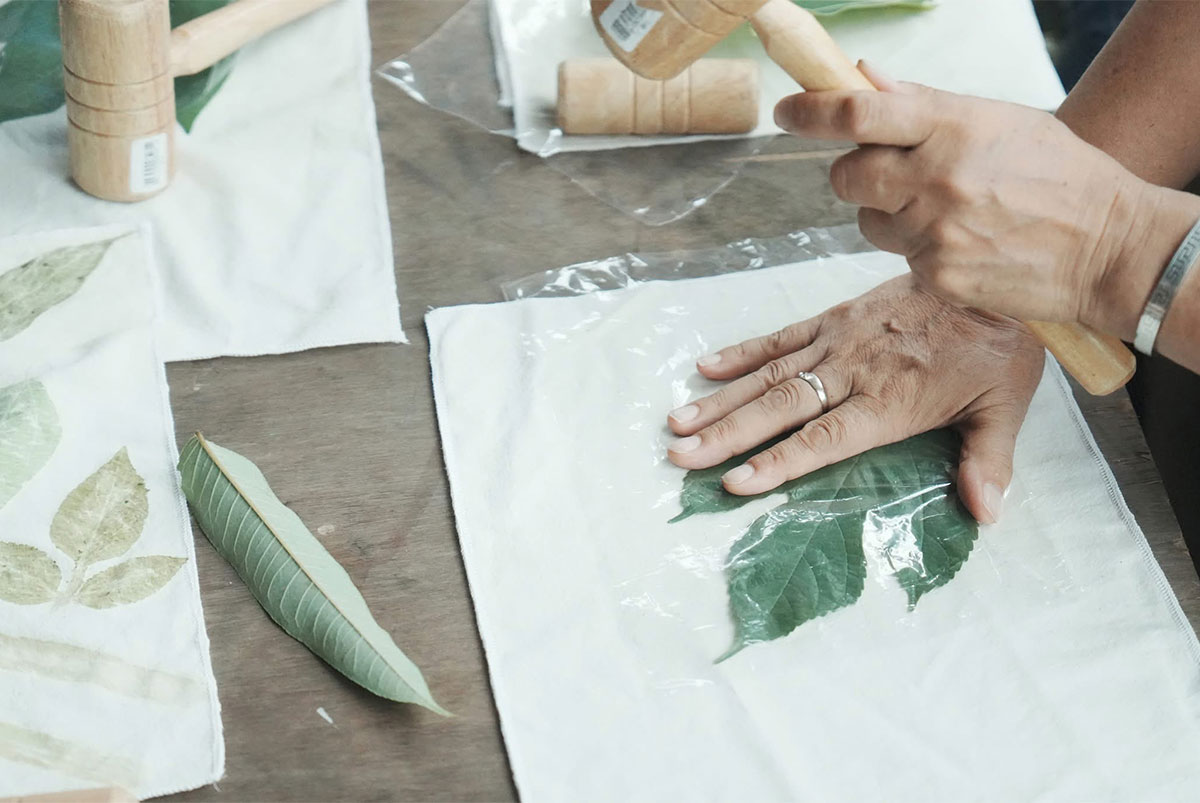 Hands-on plant dyeing—<br>creating a personalized handkerchief as a keepsake