

 2026 / 04 / 07
 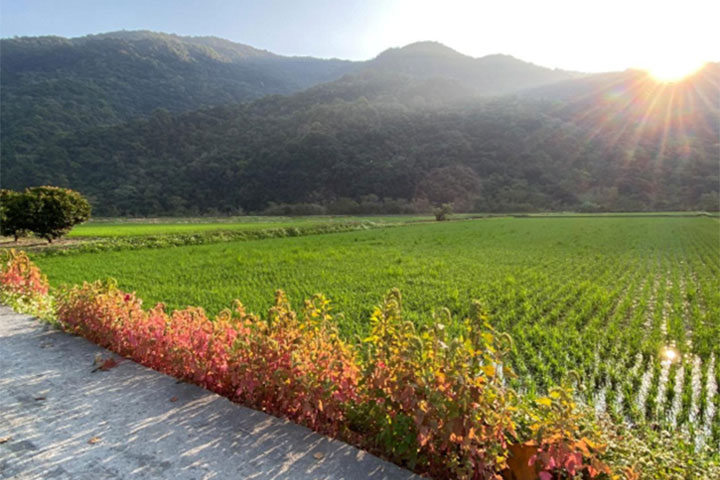 The biodiversity in the ridges of field was boosted by utilizing the tribe’s crop, red quinoa.
Tse-Xin Organic Agriculture Foundation has been participating in The International Partnership for the Satoyama Initiative (IPSI) since 2016. In the Satoyama Initiative Thematic Review Issue10 (SITR-10) published recently, the project members from Tse-Xin shared the story about the conservation of Kikuchi’s minnows (Aphyocypris kikuchii), in which both Tse-Xin Foundation and the Bunun people in Tribe Namuan were engaged.
Tse-Xin’s practical action of conservation for Satoyama Initiative splashed in the thematic review of IPSI.
Tse-Xin Organic Agriculture Foundation joined the International Partnership for the Satoyama Initiative (IPSI) since 2016. A team has been actively taking part in domestic and international Satoyama community. Throughout these years, by promoting Green Conservation Mark, they keep protecting the environment of the foothills and farmlands all over Taiwan.
In the Satoyama Initiative Thematic Review Issue10 (SITR-10) published recently, the project members from Tse-Xin shared the story about the conservation of Kikuchi’s minnows (Aphyocypris kikuchii), in which both Tse-Xin Foundation and the Bunun people in Tribe Namuan were engaged.
Satomaya Initiative Thematic Review is the annual publication representative of IPSI. The publication is a collaboration between the Satoyama Initiative Secretariat in United Nations University Institute for the Advanced Study of Sustainability (UNU-IAS) and the Institute for Global Environmental Strategies (IGES). Springer, the world-famous academic publisher, takes charge of the editing and printing.
The case studies included in a publication are related to one particular theme. The publication for this year focuses on the topic of “ecological connectivity”, referred to as the mobility of the animals from one landscape to another. Ecological connectivity influences the genetic diversity of species, pollination, seed dispersal, nutrient cycling, etc. It’s also critical for the survival and migration of the wild animals and plants, and even helps alleviate climate change and build up the wildlife resilience.
In Tse-Xin’s case, the conservation team has endeavored to protect Kikuchi’s minnows and the ecosystem of the local paddy fields in Tribe Namuan, Hualien for years. The article discusses how the indigenous farmers and partners from different sectors made every effort to enhance the quality of local organic paddy fields and ecological connectivity.
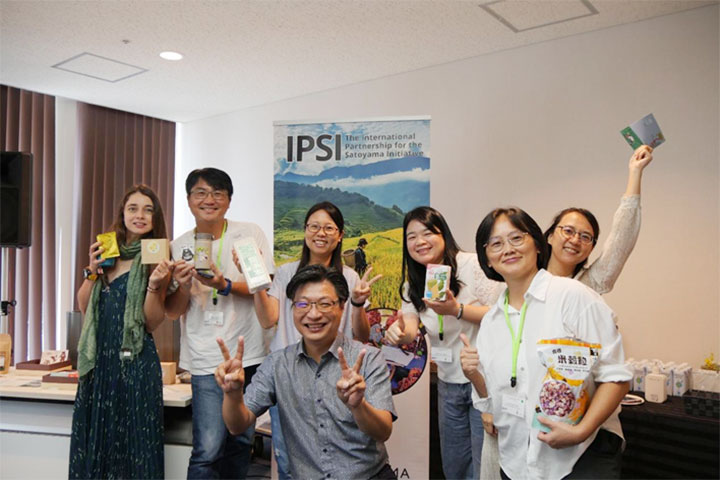 The authors from Taiwan of SITR-10. (Source: UNU-IAS)
 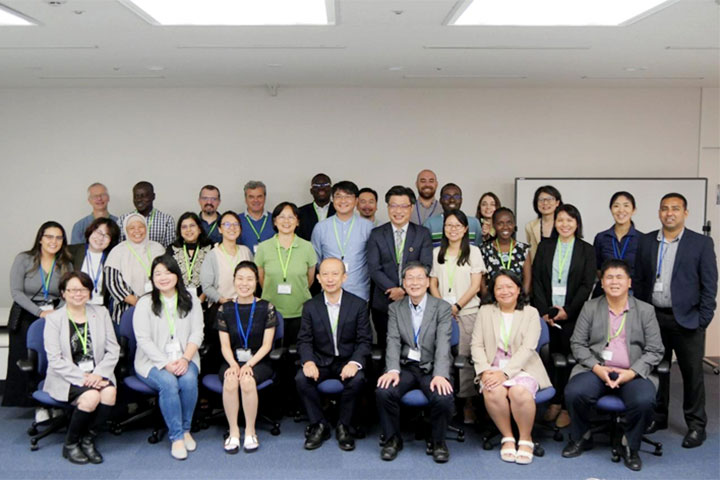 The group photo for authors and the organizer of SITR-10. (Source: UNU-IAS)
Through a series of calls for submissions, reviewing, discussions, and editing, the draft was eventually finalized and moved on to publication. Of the 12 chosen articles for this year, 4 were submitted from Taiwan, and others were from Spain, Kenya, Columbia, Ghana, Thailand, Malaysia, Indonesia, etc. The authors shared their own cases and made comments for each other. Moreover, they dived into the discussion about the correlation between “ecological connectivity” and the management of foothill landscapes, making the concept of the topic clearer. Field workers and researchers discussed in depth, based on their own practical experiences, which was a great opportunity to learn. Tse-Xin’s conservation team thus understood the value their case could provide for the international conservation issue.
At the end of 2013, Yushan National Park Headquater invited Tsu-Xin’s team to step into the first farmland located at the foot of Mt. Yushan. In 2016, with the assistance of Ecologist Lin Tsing Feng, the team discovered the trace of the rare fish species, Kikuchi’s minnow. Developments of animal habitats, payment for ecosystem services, and passing down traditional wisdom were also carried out during the project. Thanks to the ongoing project held by E.SUN Commercial Bank, Tse-Xin was able to continue learning from the locals and lands. Big thanks were also given to the sponsors: Yushan National Park Headquater, the Hualien Branch of Forest and Nature Conservation Agency, and Satoyama SDM. Last but not least, Tribe Namuan played an important role for the people’s great efforts and perseverance.
Aside from the case study of Namuan in Hualien, there are other cases from Taiwan, for example, Hualien ecosystem conservation network, natural farming Black-Shouldered Kites Rice of Wu-Feng Farmers' Association, and stone weir preservation done by the youth of Penghu. See the full text of the publication by clicking the link below:
https://link.springer.com/book/10.1007/978-981-95-1474-8
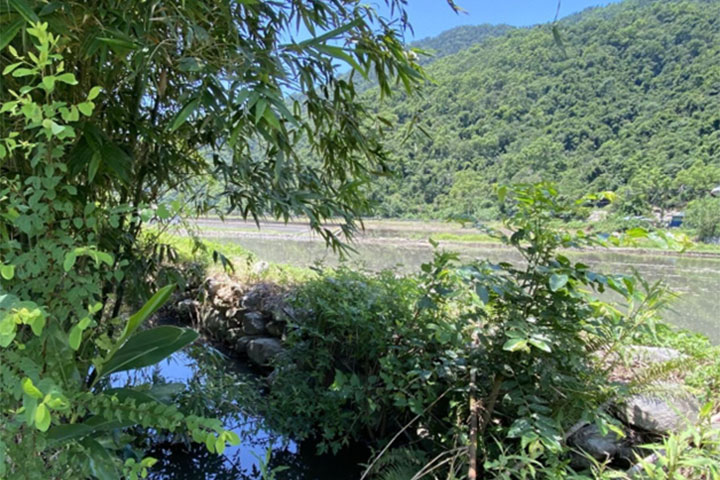 Namuan farmers preserved the ditch by planting bamboos and keeping the naturally-germinating bushes, which provided cooling for the water in the ditch and built up another environment for animals to inhabit and hide.