
In South Link,
the train slowly pulls into Jinlun Station, as if unloading the fatigue of a long journey, quietly stopping at this hot spring town nestled between the mountains and the sea. Stepping out of the station, you’re greeted by a pace of life completely different from the city: the sea breeze brushing past, a few bathers chatting while waiting for the shuttle, and occasionally, the welcoming songs of the indigenous people drift through the streets and into travelers’ ears…
Time here seems to move a beat slower; stepping out of the station, your pace naturally slows down.
Just a two-minute walk from the train station, turning into an inconspicuous alley, a gentle breeze blows—and there, swaying under the sunlight, is a lush green millet field.
Wait, what?! Right in front of the train station, a millet field?

These seeds left by our ancestors must continue to be planted.”
 To meet tourism demands, most prime land in front of the station has been redeveloped into hotels and guesthouses. <br>Chen Meixiang’s millet field stands out unexpectedly, yet irresistibly charming.
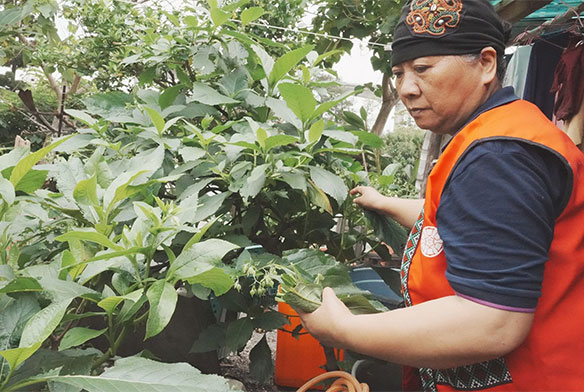 Meixiang skillfully picks oxalis leaves, and within minutes, <br>a steaming plate of millet and oxalis stir-fry is ready…
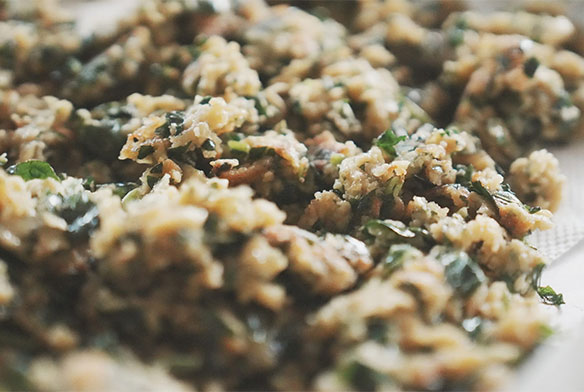 Millet and oxalis stir-fry
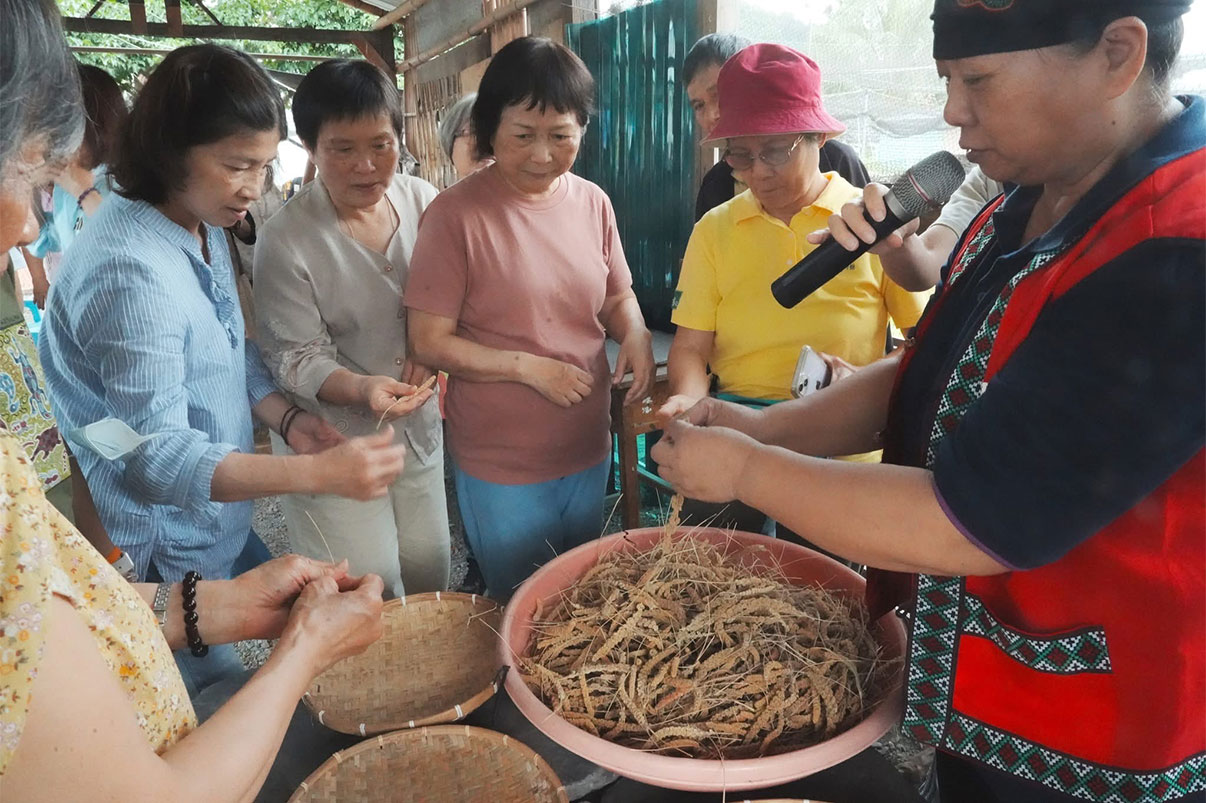
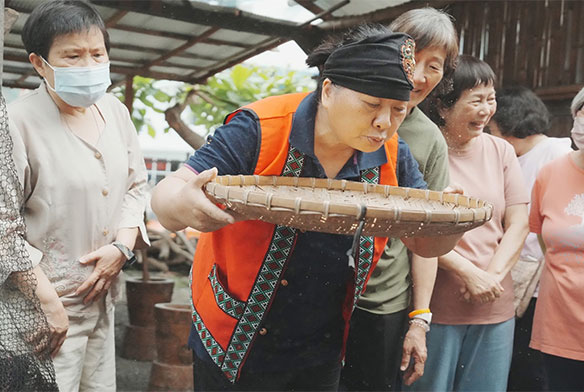 Visitors experience dehulling millet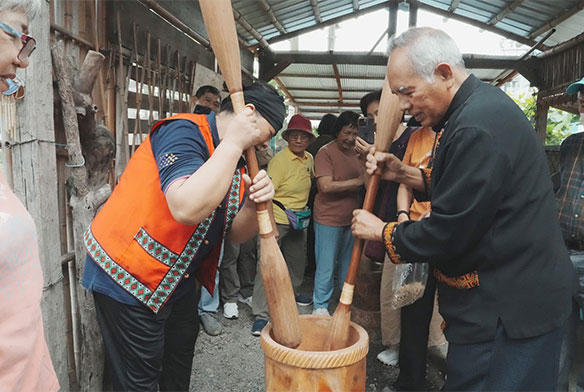
To meet tourism demands, most prime land in front of the station has been redeveloped into hotels and guesthouses, yet one person quietly planted a field of memories here.
It stands out unexpectedly, yet irresistibly charming.
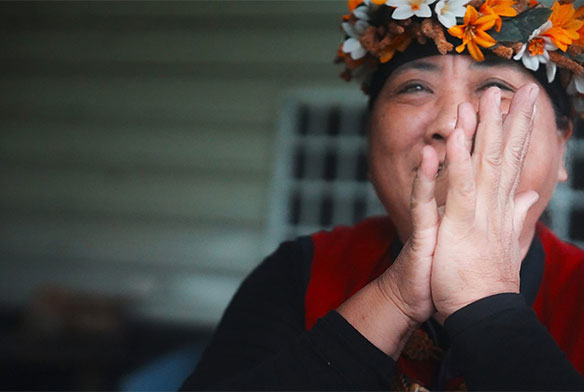
This is Chen Meixiang (Kaleskes)’s millet field full of memories,
a Paiwan woman who weaves “beauty” and “fragrance” into her daily life and traditional dishes.
“I make many traditional millet dishes, like millet wine, millet mochi, millet dumplings, millet cakes, and even millet donuts. These are all recipes my mother taught me. The dishes I make now are the flavors of my mother’s cooking that I remember,” Meixiang says with a smile.
“Leaves from the oxalis plant can be stir-fried with eggs, wrapped into qinafu, or made into pancakes. Every wild vegetable is the land’s gift to us.” Meixiang skillfully picks a few oxalis leaves, and within minutes, a steaming plate of millet and oxalis stir-fry is ready…
When talking about millet cakes, her eyes light up with memories.
“When I was a child, making millet cakes sometimes meant being woken up at four or five in the morning by my mother to tend the fire. Cakes usually needed to be steamed for over ten hours, and the fire could never go out. We kids often nodded off while watching the fire. Life was hard, and store-bought cakes were expensive, so we’d get so excited when the cakes were finally ready that our eyes would light up just thinking about it.”
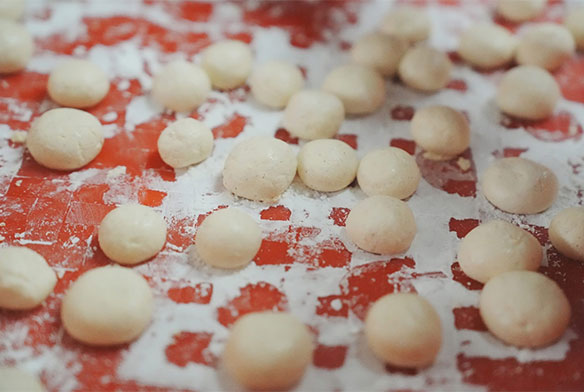
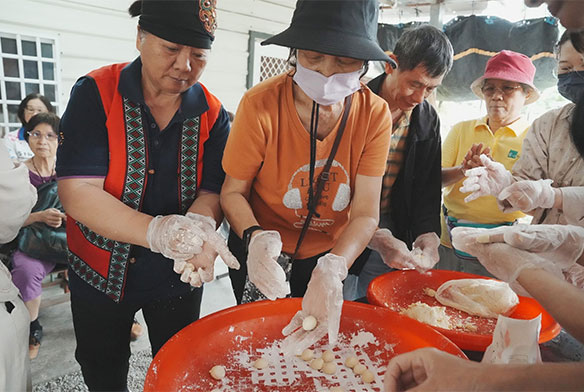 Handmade millet dumpling experience
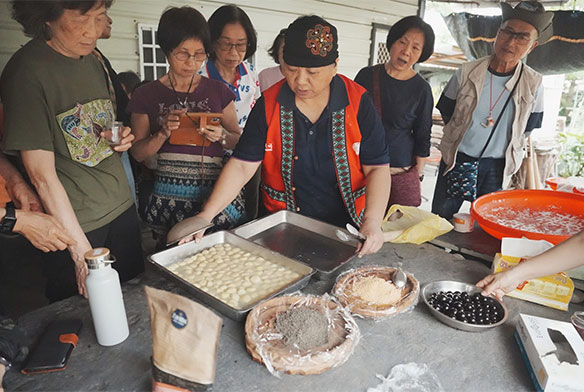 Cooked millet dumplings coated with <br>peanut or sesame powder are ready to eat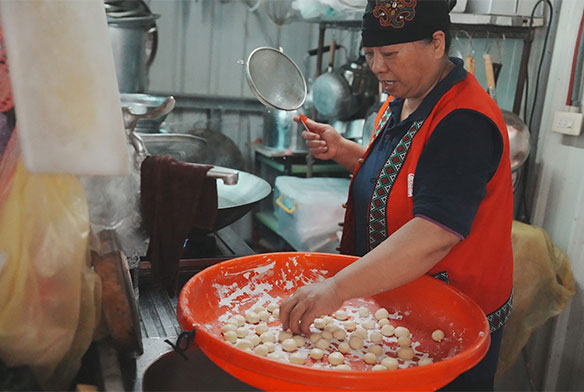
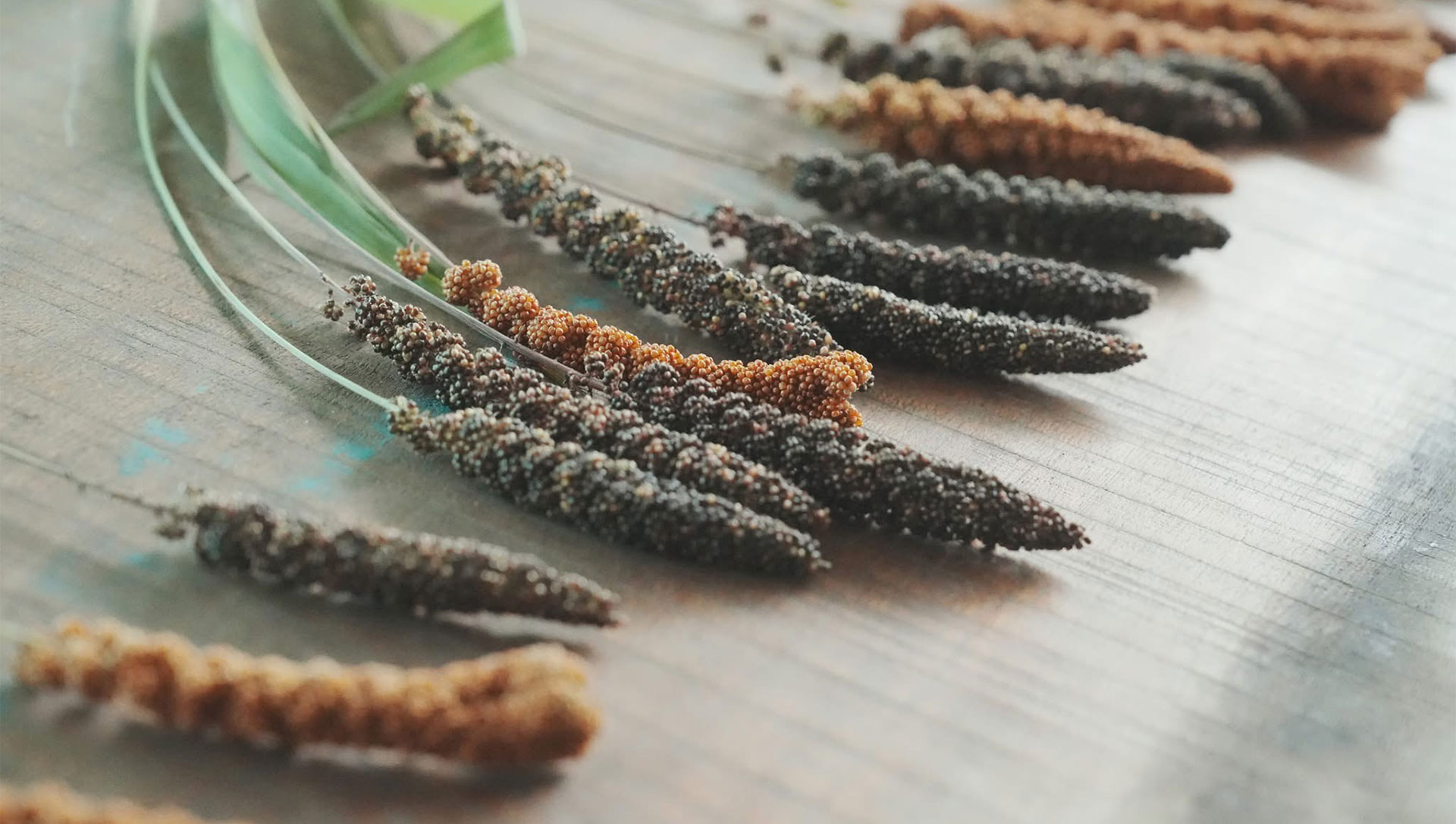
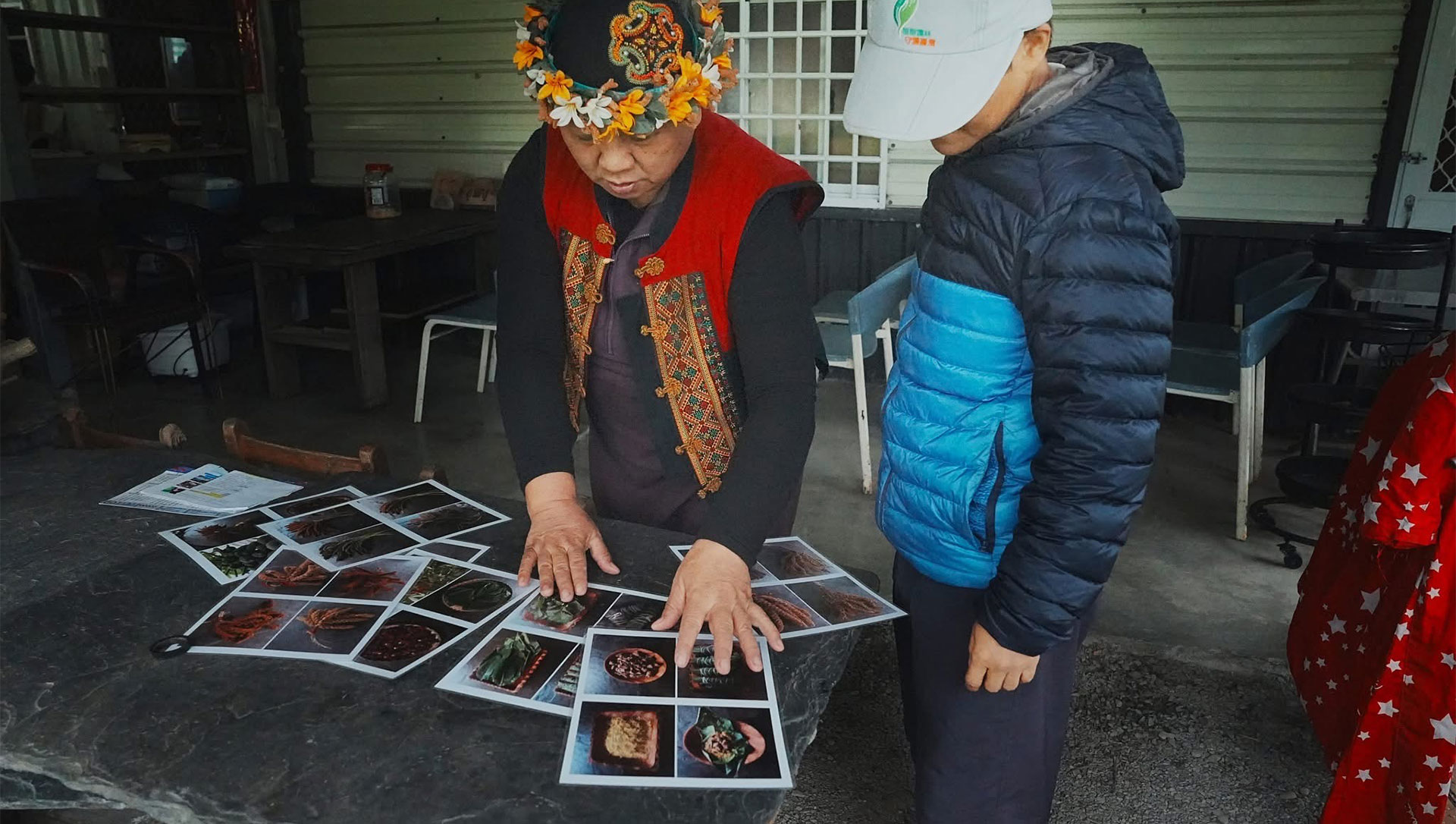
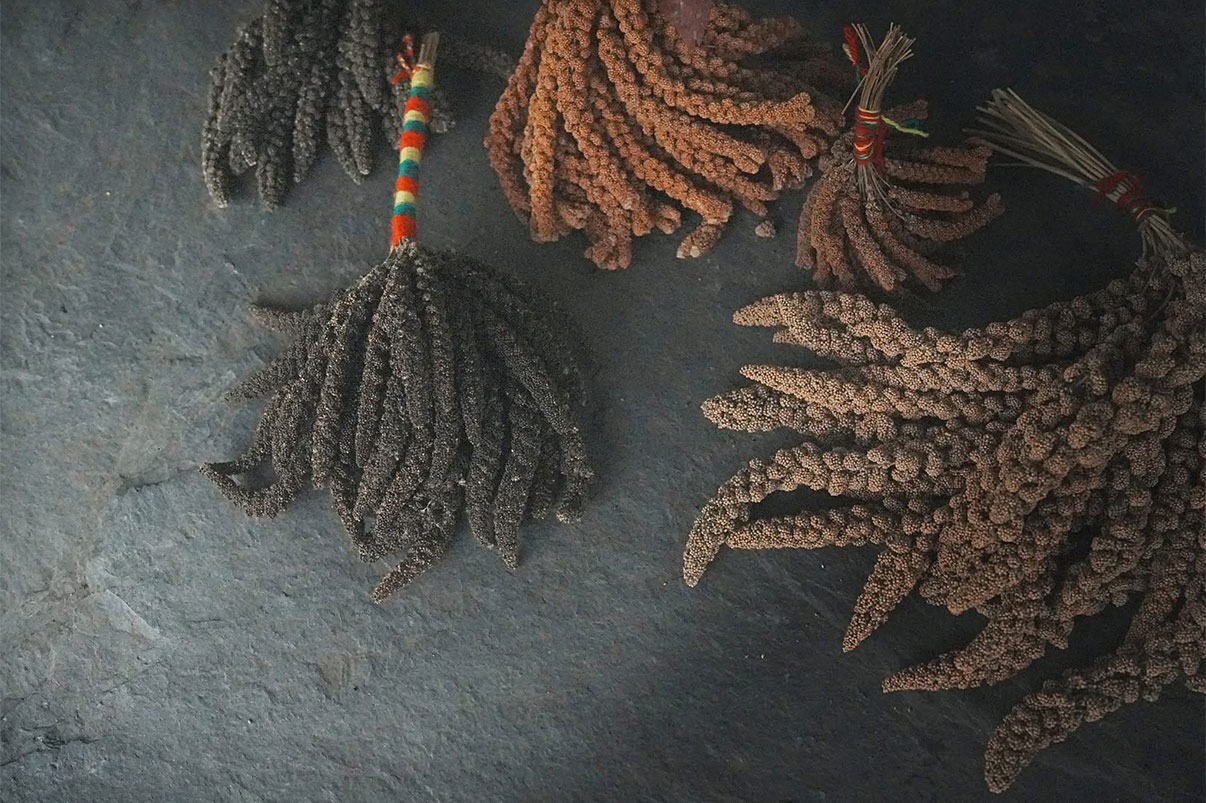
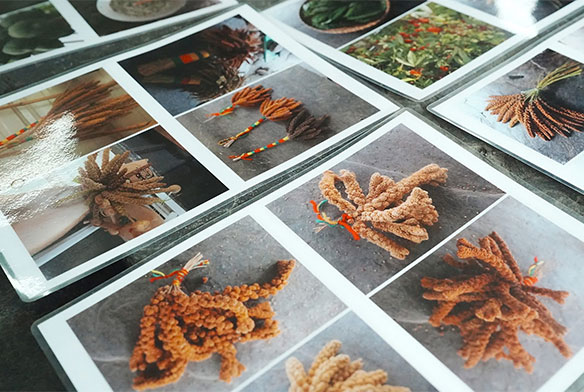
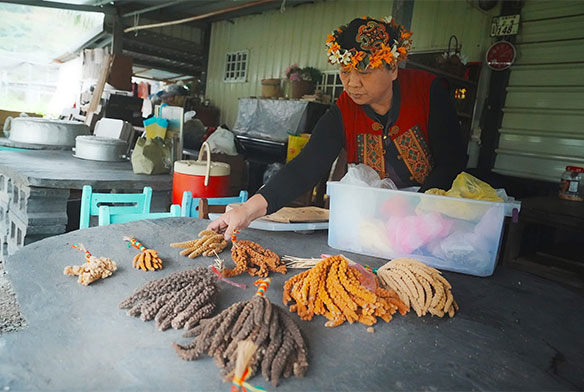 Meixiang shows us her collection of millet…
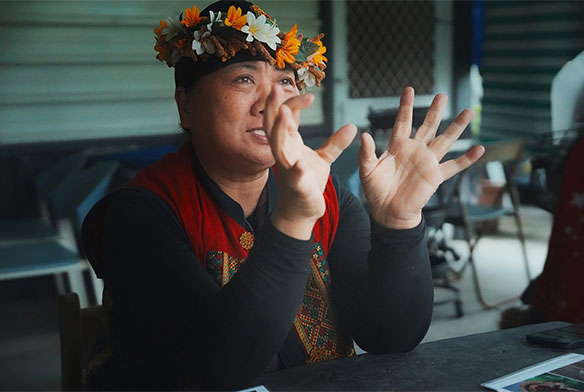 “All my millet dishes were taught by my mother.<br> What I cook now is the taste of my mother I remember.”
After retirement, why did she want to plant millet?
“We grew millet at home when I was a child!
The important thing is millet tastes really good, and my family loves it. So I chose to plant millet from my memories—not for selling, but to return to those joyful times in the millet fields with our elders.”
“After school, we’d run straight to the mountains. The elders set up a swing by the fields, and we kids would help harvest millet or fetch water. Playing in the fields taught us so much; unlike kids today, who mostly just have their phones…”
“Planting millet is like traveling through a time tunnel, taking me back to the childhood fields. Those carefree days with the elders were truly joyful and relaxing.”
“Some millet seeds were given to me by the elders, some by relatives, passed down through generations. These seeds left by our ancestors must continue to be planted. I also thank God for giving us this land; just a two-minute walk from Jinlun Station, you can see a millet field without going deep into the mountains…”
“I don’t use pesticides in my field!
I insist on no pesticides because it’s better for the land and healthier for our bodies. Without pesticides, many wild vegetables sprout up in the off-season when millet isn’t planted…”
Today, Meixiang also transforms these memories into dishes, sharing them with visiting travelers.
Step by step, dish by dish, the taste of memory-filled millet is brought back to the modern table.
Friends, the next time you visit Jinlun, besides soaking in the hot springs, don’t miss this memory-filled millet field.
Sit with Meixiang, enjoy freshly made qinafu, sip on sweet and tangy roselle tea, and listen to her stories about how this humble millet gently yet resiliently connects memory after memory…
Perhaps, in a bite of millet, you’ll taste a certain longing too…
#SeedPreservation #FriendlyFarmingMillet #MilletCuisine
#JinlunBeyondHotSprings
📞 Guided tour reservation: 0952-961103 (Meixiang)

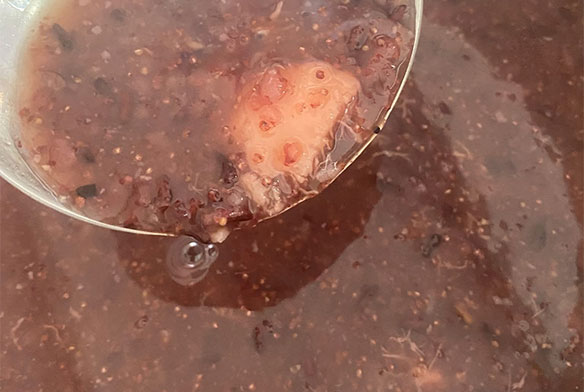 Glutinous millet red bean soup